Forklifts keep Queensland businesses moving. But a machine that makes light work of a tonne of stock can do the same to a person, which is exactly why the law treats forklift operation so seriously. Whether you run the business or sit in the operator’s seat, you carry legal duties under Queensland’s work health and safety laws.
This guide breaks down what those obligations actually mean in practice: who needs a licence, what employers must put in place, and the day-to-day responsibilities that keep your people safe and your business compliant.
Why Forklift Safety Is A Legal Issue
In Queensland, operating a forklift is classed as high-risk work under the Work Health and Safety Act 2011 and the Work Health and Safety Regulation 2011. That classification is why a licence is mandatory, and why both operators and business owners are held to a high standard.
Workplace Health and Safety Queensland (WHSQ) enforces these laws, and the consequences for getting it wrong are real. Failing to meet your duties can lead to a licence being suspended or cancelled, fines, or prosecution. More importantly, forklifts cause more workplace deaths and serious injuries than any other piece of equipment, so the compliance framework exists to prevent genuinely life-changing incidents.
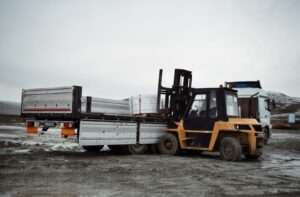
Only in April of this year, a Queensland man was killed in a workplace accident involving a forklift. The forklift operator had sustained life-threatening injuries after being crushed as the forklift rolled onto its side while travelling on a concrete ramp at Karreman Quarries. Resources Safety & Health Queensland released an alert about the incident and is continuing an ongoing investigation.
Who Needs A Forklift Licence: LF vs LO
Queensland uses two high-risk work (HRW) licence classes for forklift work, and they are not interchangeable.
LF — Forklift Truck Licence
This is the common one. It covers standard forklift trucks in which the operator sits and the mast moves — including counterbalance, reach, and high-reach forklifts. A forklift truck is legally defined as a powered truck with a mast and an elevating load carriage fitted with fork arms that can be raised 900mm or more above the ground. It does not include pedestrian-operated trucks or pallet trucks.
LO — Order-Picking Forklift Licence
This covers order-picking forklift trucks (often called “stock pickers”), where the operator’s control platform rises with the load. Because the operator is lifted with the load, it’s treated as a distinct skill set.
The important catch: holding an LF licence does not permit you to operate an LO machine, and vice versa. Match the licence to the equipment.
One exception worth knowing — pedestrian-operated forklifts don’t require a high-risk work licence. They’re not ridden by the operator, so they fall outside the licensing requirement, though only properly trained workers should ever use them.
How To Get Licensed (And How Long It Lasts)
To get an LF or LO licence, an operator completes competency-based training through a Registered Training Organisation (RTO), passes a formal assessment using the National Assessment Instrument, and then applies to WorkSafe Queensland within 60 days of passing. The licence is valid for five years, after which it must be renewed — so it’s worth tracking expiry dates across your team rather than discovering a lapsed licence mid-shift.
Your Obligations As An Employer (PCBU)
If you run the business, you’re a Person Conducting a Business or Undertaking (PCBU), and you hold the primary duty of care under the WHS Act. Here’s the part many businesses miss: it is not enough to simply hire licensed drivers. You must also ensure the forklift itself is safe and free of health and safety risks, and that the surrounding environment is managed.
In practical terms, meeting your duty means:
- Providing safe, well-maintained equipment that’s fit for the task.
- Ensuring operators are trained and licensed for the specific machine they use.
- Putting safe systems of work in place, including a traffic management plan.
- Providing adequate supervision, especially for newer operators.
- Documenting your risk assessments, inspections and incidents.
A reliable way to stay on top of all this is to follow the four-step risk management process: identify the hazards in how forklifts are actually used in your workplace, assess the risks, control them with practical measures, and review those controls regularly.
Traffic Management And Pedestrian Safety: The Biggest Risk
If you focus on one thing, make it this. More than half of forklift-related fatalities involve pedestrians, and even a slow-moving forklift can crush or kill someone on foot. Managing traffic is a specific PCBU duty under the WHS Regulation 2011, and it calls for the same risk-management approach as any other hazard.
The single most effective control is physical separation (keeping forklifts and people apart wherever reasonably practicable). A solid forklift traffic management plan typically covers:
- Designated pedestrian walkways, exclusion zones and crossing points.
- Clear signage, line marking, speed limits and one-way routes.
- Adequate lighting and visibility around blind corners, doorways and loading docks.
- High-visibility clothing for anyone on foot in operating areas.
- An induction process so contractors and visitors understand the plan before they’re anywhere near a forklift.
Review the plan regularly and consult your operators and health and safety representatives when you do.
Maintenance Is A Compliance Duty
Because your duty extends to the safety of the plant itself, forklift maintenance is part of your WHS obligation. Forklifts must be inspected and maintained in line with the manufacturer’s instructions, and the work should be done by a competent person. For LPG-powered machines, only a licensed gas fitter should work on gas components. And you must keep detailed records of every inspection, service, repair and modification.
This is where a reliable servicing partner earns its keep. Keeping a maintained fleet is one of the most straightforward ways to demonstrate you’ve met the “safe plant” element of your duty.
At Freedom Forklifts, every machine we hire or sell is serviced in-house and maintained to manufacturer standards, which takes a meaningful chunk of that compliance burden off your plate.
What Operators Must Do Every Shift
Licensing gets an operator through the door; safe daily practice is what keeps everyone protected. Under Queensland WHS law, operators are expected to:
- Hold a current licence for the machine type and operate only within the conditions of their training.
- Complete pre-start safety checks at the start of every shift — brakes, steering, tynes, hydraulics, warning devices, tyres and load chart.
- Wear a seatbelt where one is fitted, and the required high-visibility clothing.
- Keep loads within the rated capacity, evenly distributed, and carried as low to the ground as practicable.
- Follow the site traffic management plan — speed limits, exclusion zones and signage.
- Report faults, hazards or mechanical issues immediately, and never operate a forklift that’s damaged or tagged out.
- Not operate while fatigued, and use the machine only for the purpose it was designed for.
What Happens If You Don’t Comply
Non-compliance is a liability. WHSQ can suspend or cancel an operator’s licence, and businesses can face significant fines or prosecution under the tiered offence categories in the WHS Act.
On top of the legal exposure sits the operational cost of a serious incident: downtime, investigation, increased premiums, and the human toll on your team. Viewed that way, compliance is simply good risk management.
Keep Your Business Compliant
Meeting your WHS obligations comes down to three things: licensed operators, a safe working environment, and well-maintained machines.
Freedom Forklifts can help with a reliable hire fleet and new and used forklifts backed by in-house servicing and maintenance that keeps your equipment compliant and your operators safe.
Need advice on the right machine for your site, or want to talk through your fleet’s servicing schedule? Get in touch with our team. Our business is keeping your business in business.
Frequently Asked Questions
How long does a forklift licence last in Queensland?
A high-risk work licence (LF or LO) is valid for five years and must then be renewed through WorkSafe Queensland.
Do you need a car licence to operate a forklift?
Not to operate one within a workplace — what’s legally required is the relevant LF or LO high-risk work licence, not a standard driver licence. Using a forklift on a public road introduces additional requirements, so check those before leaving private property.
What’s the difference between an LF and LO licence?
LF covers seated forklift trucks (counterbalance, reach, high-reach). LO covers order-picking forklifts where the operator rises with the load. One doesn’t cover the other.
What safety devices does a forklift need?
At a minimum, an operator restraint (seatbelt) where fitted. Beyond that, your risk assessment determines what’s reasonably practicable — warning lights and alarms, mirrors, load guards and rollover protection are common controls.
Do pedestrian-operated forklifts need a licence?
No, but only trained workers should use them, and the same duty to manage hazards applies.
This article is general information only and isn’t legal advice. For the current requirements that apply to your workplace, refer to Workplace Health and Safety Queensland (worksafe.qld.gov.au).