When you plan to hire or buy a forklift for your Queensland site, figuring out the exact operator licence requirements can quickly get confusing. Queensland workplace health and safety laws require operators to hold a national High Risk Work Licence before operating powered material handling plant, but different machine designs fall under different licence categories.
If an employee operates machinery without the correct licence class on their ticket, your business faces significant regulatory fines under Queensland WHS legislation and risks invalidating your commercial insurance coverage in the event of an accident.
This guide provides a clear, practical breakdown matching Queensland licence classes to real-world warehouse machines, sourced directly to WorkSafe Queensland.
- LF licences cover standard forklift trucks: This includes counterbalance forklifts, reach trucks, high reach units, container handlers, rough-terrain forklifts, and telehandlers fitted with fork arms.
- LO licences cover order-picking forklifts: This class is required exclusively for stock pickers and VNA turret trucks where the operator platform elevates alongside the load carriage.
- An LF licence does NOT cover an LO machine (and vice versa): Under Australian law, these are two distinct High Risk Work Licence classes; an LF ticket does not legally permit an operator to drive an order picker.
- Pedestrian equipment does not require an HRW licence: Walk-behind walkie stackers and electric pedestrian pallet jacks sit completely outside High Risk Work licensing rules.
- Employer training duties still apply: Even when a machine is exempt from formal licensing, employers hold a strict legal duty of care to provide documented equipment training and safe operating procedures.
What Is a High Risk Work Licence?
In Australia, a High Risk Work (HRW) Licence is a nationally recognised photographic qualification issued by state WHS regulators. In Queensland, WorkSafe Queensland administers and enforces these licences.
Operating an industrial plant involves significant physical hazards, including tip-over risks, falling loads, structural collisions, and pedestrian injuries. A High Risk Work Licence proves that an operator has completed formal classroom theory, logged practical operating hours, and passed a rigorous competency assessment through an accredited Registered Training Organisation (RTO).
Under Queensland WHS regulations, HRW licences are photo cards that must be renewed every five years. Operators must keep their licence document available for inspection whenever they perform high-risk work on site.
What an LF Licence Covers
Under Queensland legislation, an LF licence is the primary High Risk Work class for a standard “forklift truck”. WorkSafe Queensland defines a forklift truck as a powered industrial truck with a mast and an elevating load carriage attached to a pair of fork arms or other arms that can raise a load 900 mm or more above the ground, but excludes pedestrian-operated trucks and pallet trucks.
If your business operates any of the following machinery types, your operator must hold a valid LF licence:
- Counterbalance Forklifts: Standard sit-down or stand-on electric, LPG, or diesel machines used across yards, loading docks, and warehouse floors. To explore how counterbalance weight distribution works, read our guide on what is a counterbalance forklift.
- Reach Trucks & High Reach Forklifts: Specialised indoor warehouse machines engineered with forward-extending outrigger legs and tall masts for narrow aisle racking. Learn more in our detailed article on what is a high reach forklift.
- Rough-Terrain & Container Handling Forklifts: Heavy-duty industrial trucks designed for unpaved construction sites, timber yards, or shipping container terminals.
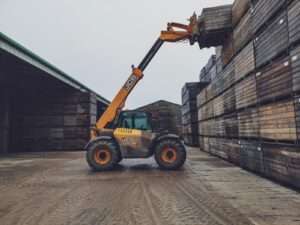
- Telehandlers (Fitted with Fork Arms): Multi-purpose tool carriers fitted with a non-slewing boom and fork arms, operated purely as a forklift truck.
Because the LF licence is the most versatile category in material handling, the industry commonly refers to it as the “standard forklift ticket”.
What an LO Licence Covers
An LO licence applies specifically to an “order-picking forklift truck”. WorkSafe Queensland defines an LO class machine as an industrial truck where the operator’s control console is integrated into the load carriage and elevates vertically alongside the load.
In everyday warehouse and logistics operations, people commonly refer to these machines as stock pickers, order pickers, or VNA (very narrow aisle) turret trucks.
Because operators travel upward into high racking structures, these machines create distinct operational hazards, including elevated fall risks, harness safety requirements, emergency lowering procedures, and restricted floor-level visibility. As a result, obtaining an LO licence requires dedicated training in fall-arrest safety systems, harness attachment points, and high-level rack navigation.
Does an LF Licence Cover LO (or the Other Way Around)?
This is one of the most frequently asked questions warehouse managers ask when building their operational team: Does an LF licence cover an order picker, or does an LO licence allow you to drive a counterbalance forklift?
No. An LF licence does not cover an LO machine, and an LO licence does not cover an LF machine.
The two licence classes are entirely separate under the Work Health and Safety Regulation 2011 (QLD). An operator with a standard LF forklift ticket cannot legally operate an elevating order picker without completing a separate LO assessment. Similarly, an LO licence holder cannot legally drive a sit-down counterbalance forklift.
If your facility operates both sit-down counterbalance forklifts and elevated stock pickers, your operators must hold both LF and LO licence classes listed on their High Risk Work Licence card.
Which Licence for Which Machine?
To help you audit your site’s fleet quickly and ensure complete compliance, use this practical quick-reference lookup table matching common material handling machinery to the required Queensland licence class:
| Machine Category | Operator Position | Queensland Licence Required | Core Regulatory Detail |
|---|---|---|---|
| Counterbalance Forklift | Seated / Standing inside cabin | Class LF Licence | Covers electric, LPG, and diesel counterbalance models |
| Reach Truck / High Reach | Seated / Standing inside cabin | Class LF Licence | Mast lifts load 900 mm+ above ground level |
| Order Picker (Stock Picker) | Elevated on load carriage | Class LO Licence | Controls elevate vertically with the operator platform |
| VNA Turret Truck | Elevated on load carriage | Class LO Licence | Classified as an order-picking forklift truck |
| Walkie Stacker (Pedestrian) | Walking behind tiller arm | No HRW Licence Required | Classified as pedestrian-operated plant |
| Ride-On Walkie Stacker | Standing on rear platform | Check WorkSafe QLD | Exempt if walking pace; check speed ratings |
| Electric Pedestrian Pallet Jack | Walking behind tiller arm | No HRW Licence Required | Exempt under pedestrian-operated plant rules |
| Telehandler (Fork Arms) | Seated inside cabin | Class LF Licence | Non-slewing units operating with fork attachments |
When You Don’t Need a Licence (But Still Need Training)
Not all warehouse material handling equipment requires a High Risk Work Licence. Sourced directly to WorkSafe Queensland guidance on licence exemptions, pedestrian-operated equipment sits completely outside formal HRW ticket requirements:
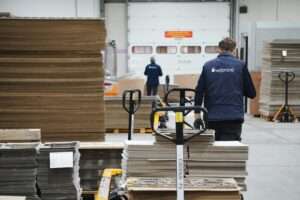
- Manual & Electric Pallet Jacks: Pedestrian pallet trucks do not lift loads into high racking and travel at normal walking speed.
- Pedestrian Walkie Stackers: Because the operator walks alongside the unit rather than riding inside an enclosed cabin or elevated carriage, standard pedestrian walkie stackers do not require an LF or LO licence.
It is a dangerous operational trap to assume that “no licence required” means zero training is needed on site.
Under Section 19 of the Work Health and Safety Act, employers hold an unconditional legal duty of care to ensure that all workers receive adequate information, instruction, practical training, and supervision before operating any plant.
In practice, a compliant business should maintain documented operator inductions covering start-up checks, emergency stop controls, load capacity limits, and safe travelling speeds. For a comprehensive overview of your workplace safety responsibilities, review our guide on meeting your WHS obligations in Queensland.
How to Get Your LF or LO Licence in Queensland
If you or your team members need to obtain an LF or LO High Risk Work Licence in Queensland, the application process follows four structured steps:
1. Enrol with an Accredited RTO: Select a Registered Training Organisation approved by WorkSafe Queensland to deliver the relevant national unit of competency (TLILIC0003 for Class LF or TLILIC0004 for Class LO).
2. Complete Training & Practical Logbook: Undergo formal classroom theory, complete supervised practical operating hours, and pass a formal evaluation conducted by an accredited High Risk Work assessor.
3. Lodge Your Application Online: Once you receive your Candidate Assessment Summary, complete your online application via the WorkSafe Queensland online portal within 60 days of your assessment date.
4. Pay the Official Regulator Fee: Pay the mandatory Queensland HRW licence application fee of $106.30 (fee benchmarked to Workplace Health and Safety Queensland schedule).
Logbook Training Exceptions
Under Queensland WHS regulations, unlicenced workers can lawfully operate a forklift on site only if they are enrolled in formal training with an accredited RTO and operating under the direct supervision of a fully licenced HRW licence holder.
Once approved, a Queensland High Risk Work Licence is valid for five years and is nationally recognised across every state and territory in Australia.
Hiring a Forklift? Check Your Operator’s Licence First
Before arranging a machinery delivery for an upcoming project or seasonal rush, run through this practical 3-step checklist to protect your site:
1. Match the Machine to the Ticket: Verify whether your hire unit is an LF class counterbalance or reach truck, or an LO class stock picker.
2. Sight the Physical Photo Card: Inspect the operator’s HRW licence card to verify the expiry date, confirm the holder’s photo, and check that the correct LF or LO class code is listed on the back.
3. Conduct a Site-Specific Induction: Even highly experienced LF licence holders require a site induction covering your facility layout, pedestrian exclusion zones, speed limits, and floor surface conditions.
When you organise a short-term rental or long-term lease through our team, we assist you in confirming that your selected equipment matches your team’s existing licence credentials. Learn more about choosing the right rental structure in our guide on short-term vs long-term forklift hire.
Talk to the Freedom Forklifts Team
Not sure whether an LF counterbalance forklift, an LO stock picker, or a licence-exempt walkie stacker is the most efficient match for your warehouse layout and staffing structure?
At Freedom Forklifts, our experienced team provides honest, consultative advice to help you select the safest, most cost-effective equipment solution for your site. Whether you need to hire a forklift to cover a seasonal peak, explore our dependable range of new forklifts or used forklifts, or book professional maintenance, we are here to support your operations across Brisbane, the Gold Coast, Logan, and Northern NSW.
Get in touch with our expert team today or call our workshops directly in Nerang (07 5596 5777) or Yatala (07 3059 5044).