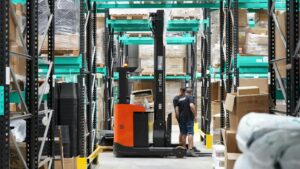
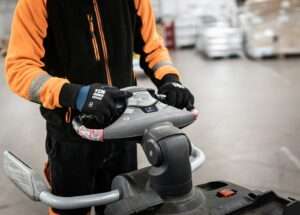
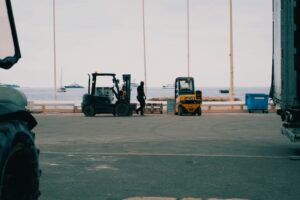
When choosing a forklift, most buyers focus on lift capacity, power source, or brand. However, one of the most important decisions is tyre type. The tyres on a forklift directly affect safety, performance, manoeuvrability, maintenance costs, and where the equipment can operate.
The two most common forklift tyre types are cushion tyres and pneumatic tyres. While both are designed to support heavy loads, they are built for very different environments. Selecting the wrong tyre type can lead to premature wear, reduced traction, higher operating costs, and increased safety risks.
This guide explains the key differences between cushion and pneumatic tyres, where each performs best, and how to choose the right option for your operation.
Why Forklift Tyres Matter More Than You Think
Forklift tyres are the only point of contact between the machine and the ground. Their design influences:
- Stability under load
- Traction during acceleration, braking, and turning
- Operator comfort and fatigue
- Wear and tear on the forklift itself
- Suitability for indoor vs outdoor use
Unlike vehicles that can easily change tyres, forklift tyre selection is usually tied to the forklift model and intended environment. Making the right choice from the start can significantly improve productivity and reduce downtime.
What Are Cushion Tyres on Forklifts?
Cushion tyres are solid rubber tyres that are permanently pressed onto a steel band (rim). Unlike pneumatic tyres, they do not contain air and are not designed to flex significantly under load. Instead, they rely on their dense rubber construction and low profile to provide stability on smooth, hard surfaces.
Because of their design, cushion tyres sit closer to the ground than pneumatic tyres. This lowers the forklift’s centre of gravity, which improves stability and manoeuvrability in controlled indoor environments.
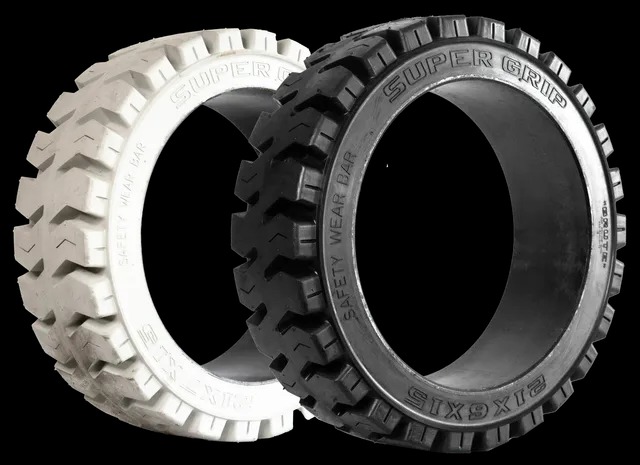
Cushion tyres are purpose-built for indoor material-handling applications and share several defining characteristics:
- Solid rubber construction – made entirely from dense rubber, eliminating the risk of punctures or air leaks.
- Pressed onto a steel band – the tyre is mounted directly onto a metal rim, creating a rigid, durable assembly.
- Smaller overall diameter – allows forklifts to operate in tighter spaces with improved turning performance.
- Low ground clearance – enhances stability on flat floors but limits use on uneven surfaces.
- No air pressure required – removes the need for pressure checks and reduces routine maintenance.
For operations where forklifts spend nearly all their time indoors, cushion tyres are often the most efficient and cost-effective choice.
They are not suitable for outdoor use, though, due to their poor traction on uneven surfaces. Reduced shock absorption and wearability can make them unsuitable for any environment outside a controlled indoor setting.
What Are Pneumatic Tyres on Forklifts?
Pneumatic tyres are larger, treaded tyres similar in appearance to those used on cars, trucks, or industrial vehicles. They are designed to provide traction, stability, and shock absorption on uneven or outdoor surfaces where cushion tyres would struggle.
Their deeper tread pattern and greater diameter allow forklifts to handle rougher terrain while maintaining control and operator comfort.
Pneumatic tyres are available in two types:
- Air-filled
- Function much like standard vehicle tyres
- Inflated with air to absorb shocks and vibrations
- Improved traction on gravel, asphalt, and rough concrete
- Often chosen when operator comfort and surface adaptability are priorities
- Solid
- Made entirely from rubber but are moulded to resemble air-filled tyres
- Puncture-proof construction
- Longer lifespan in harsh or debris-filled environments
- Commonly used in outdoor industrial settings where reliability outweighs ride comfort
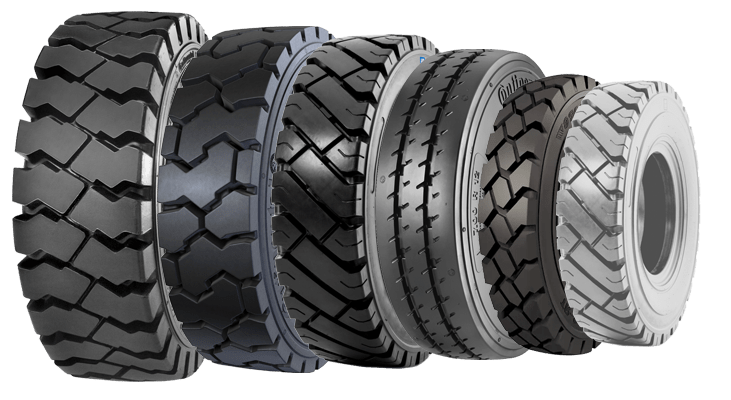
Pneumatic tyres are designed for outdoor or mixed-surface environments, where forklifts encounter uneven ground and varying traction conditions.
Pneumatic tyres provide clear benefits in challenging environments:
- Excellent traction on uneven surfaces
- Superior shock absorption, reducing vibration and operator fatigue
- Suitable for outdoor and mixed environments
- Improved operator comfort, especially over long shifts
- Increased stability on slopes, ramps, and rough ground
However, pneumatic tyres also come with higher upfront costs and increased maintenance requirements, as well as the risk of punctures and an increased turning radius for the forklift.
Choosing the Right Tyre for Your Operation
Selecting the correct forklift tyre is less about preference and more about matching the equipment to how and where it will be used. While cushion and pneumatic tyres each have clear strengths, the right choice depends on understanding your operating environment, workload, and long-term cost considerations.
Simply answer these questions:
Where Will the Forklift Operate Most of the Time?
Are Surfaces Smooth or Uneven?
Will the Forklift Travel Outdoors Regularly?
How Tight Are Your Aisles and Workspaces?
Is Low Maintenance or Versatility the Priority?
What Is the Long-Term Cost Impact?
When these factors are considered collectively, the correct tyre choice often becomes clear. The goal is not to choose the “best” tyre overall, but the best tyre for your specific operation.
Do All Forklifts Allow Any Tyre Type?
Tyre selection should be done at the time of forklift selection, not after.
This is because forklifts are engineered to operate with specific tyre types, sizes, and configurations that align with their design, stability profile, and intended operating environment. Not all forklifts can safely or legally be fitted with any tyre type.
Forklift manufacturers design machines around factors such as:
- Centre of gravity
- Ground clearance
- Load capacity and stability
- Turning radius
- Indoor or outdoor suitability
Changing tyre type can alter these characteristics, affecting safety and performance.
There are limited circumstances in which tyre changes may be permitted, such as switching between air-filled and solid pneumatic tyres of the same approved size, but any change must remain manufacturer-approved and compliant.
The key takeaway is that tyres and forklifts must be selected together. Choosing the right forklift model for your environment will naturally determine the correct tyre type.
Discuss Your Forklift Needs
Forklift tyres play a critical role in safety, efficiency, and long-term operating costs. While cushion and pneumatic tyres are both designed to handle heavy loads, they serve very different purposes.
At Freedom Forklifts, we supply new and used forklifts, and our experienced team can assess your warehouse layout or project environment and help you select the right forklift for the job. Contact us today to discuss your needs.