If you manage a busy warehouse, transport depot, or commercial distribution yard in Australia, you already know that floor space is expensive and standing inventory ties up working capital. Traditional warehousing relies on receiving goods, moving them into high-bay storage racks, picking orders weeks or months later and staging them for delivery.
Cross-docking turns that traditional model on its head. Instead of storing products, a cross-dock operates as a high-velocity sorting hub where inbound freight moves directly from receiving vehicles to outbound transport with minimal or zero intermediate storage.
While logistics software schedules the arrival of delivery trucks, your physical throughput relies entirely on the material handling equipment working the floor. If you are reviewing your dock layout, scaling up for a new contract, or looking to right-size your machine fleet, our team at Freedom Forklifts can help you select the exact mix of hire or buy equipment for your site.
How the Process Works: The Physical Freight Flow
At its core, a cross-dock bypasses traditional warehouse put-away. Stock remains on the floor only long enough to be sorted and consolidated into an economical outbound load, typically moving through the facility in less than 24 hours.
The physical flow across the dock follows three distinct operational stages:
1. Inbound Receiving
Delivery trucks, semi-trailers, or container transport dock at receiving bays on one side of the building. Operators quickly unload palletised freight or loose break-bulk cargo from the vehicle tray.
2. Sorting and Consolidation
Instead of being placed into reserve pallet racking, items are moved directly across the staging floor. Freight is scanned, sorted by destination address, and grouped into consolidated pallet loads or staging lanes designated for specific delivery routes.
3. Outbound Loading
Once an outbound truckload is assembled, machines load the consolidated freight straight onto dispatch vehicles positioned at outbound dock doors for immediate transport to retail stores, job sites, or end customers.
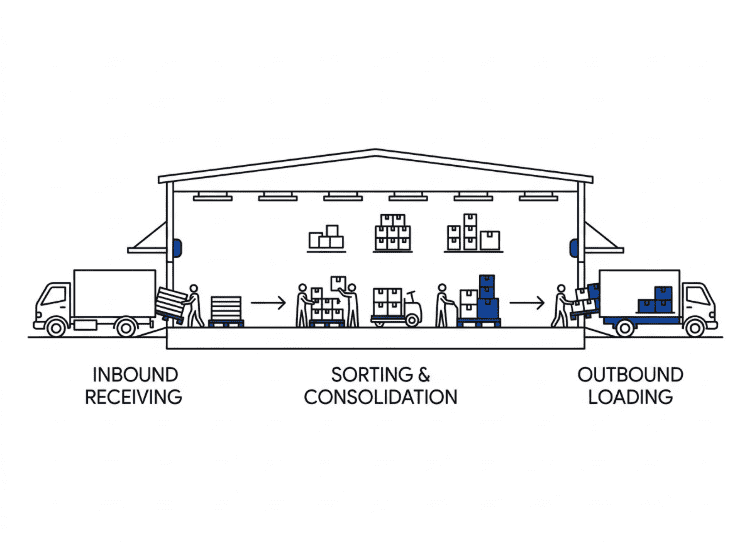
Simple diagram of cross-docking – AI-generated
Common Types of Cross-Docking
Cross-docking structures vary depending on where product identification and load assembly take place across the supply chain. The three most common operational models include:
Pre-Distribution
The supplier identifies, labels, and packs goods for specific end customers before shipping them out. When the truck arrives at the dock, operators transfer the pre-sorted pallets straight from inbound doors to outbound vehicles.
Post-Distribution
Goods arrive at the facility in bulk without customer-specific sorting. Cross-dock operators unload the shipment, break down the pallets, and sort individual cartons into store-specific orders on the dock floor.
Opportunistic
This is a hybrid approach used in traditional warehouses. When an inbound shipment arrives that matches an urgent customer backorder, operators bypass storage racking entirely, transferring the stock straight to dispatch.
Cross-Docking vs Traditional Warehousing
Understanding the operational differences between a traditional distribution centre and a cross-docking hub helps clarify whether your facility can benefit from a continuous flow strategy.
| Operational Factor | Traditional Warehousing | Cross-Docking Facility |
|---|---|---|
| Storage Duration | Weeks, months, or years in reserve racking | Under 24 hours in temporary staging lanes |
| Material Handling Touches | Multiple touches (receive, put-away, replenish, pick, stage, load) | Minimal touches (unload, sort/consolidate, load) |
| Throughput Speed | Decoupled flow reliant on safety buffer stock | Synchronised continuous flow from supplier to customer |
| Facility Layout & Footprint | Vertical storage with narrow racking aisles | Wide horizontal dock floors with extensive door perimeters |
Advantages and Limitations of Cross-Docking
Shifting to a cross-docking model offers major financial and operational benefits, but it also introduces strict operational requirements that do not suit every site.
The Key Advantages
Implementing a cross-docking strategy provides several strategic advantages that significantly improve operational efficiency and reduce overall logistics costs.
- Reduced Holding Costs: Eliminating long-term storage drastically lowers warehouse footprint requirements and cuts tied-up inventory capital.
- Lower Labour and Handling Expense: Fewer touches between receiving and dispatch reduce manual handling costs and lower product damage rates.
- Faster Delivery Lead Times: Synchronised transfer accelerates order fulfillment, helping you meet tight customer delivery windows.
Operational Limits to Consider
Evaluating your site’s readiness before adopting a cross-docking workflow is essential to ensure that your facility can handle high-velocity operations without experiencing severe bottlenecks.
- Requires Freight Synchronisation: If inbound trucks arrive late or suppliers deliver incomplete shipments, outbound dispatch schedules collapse.
- Demands Ample Dock Space: Facilities require wide staging lanes and balanced door layouts to prevent floor congestion.
- Zero Margin for Handling Errors: Since freight moves rapidly without double-handling audits, mislabelled pallets quickly end up on the wrong outbound truck.
The Equipment Core: What a Cross-Dock Runs On
Stock never sits in reserve storage, leading to exceptionally high machine utilisation on a cross-dock. Matching the right material handling equipment to each stage of the flow is essential for keeping cycle times short and preventing bottlenecks.
Counterbalance Forklifts
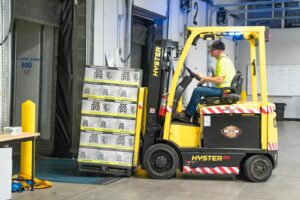
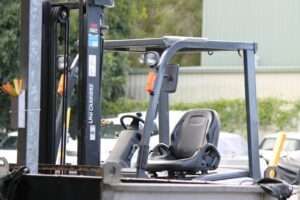
Sit-down counterbalance forklifts are the primary workhorses for unloading semi-trailers, container transport, and rigid trucks at the dock face. Their front-mounted tynes and high lifting capacity allow operators to pull heavy pallet loads straight off truck trays and transport them into receiving staging lanes. To learn how counterweight balance protects your operators during heavy lifts, read our detailed guide on what is a counterbalance forklift.
Electric Pallet Jacks
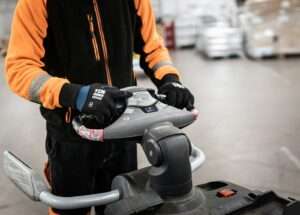
While counterbalance forklifts excel at loading and unloading trucks, using a heavy forklift to transport individual pallets across a 100-metre dock floor wastes fuel and causes floor congestion. Ride-on or walkie electric pallet jacks enable high-speed horizontal transfers, efficiently moving consolidated pallets between receiving doors and dispatch lanes.
Walkie Stackers
When staging space on the dock floor is tight, walkie stackers allow operators to safely double-stack pallets or buffer consolidated loads in low-level perimeter racks without needing a full-sized forklift.
To understand the key differences between electric pallet jacks and walkie stackers, read our detailed breakdown to choose the right equipment for your warehouse.
Electric vs LPG for Indoor Docks
When operating inside enclosed buildings with a high concentration of machinery, choosing electric forklifts and pallet jacks over LPG or diesel models is strongly recommended. Electric equipment produces zero tailpipe emissions, eliminates indoor carbon monoxide risks, runs far more quietly, and significantly reduces weekly energy expenses.
Want to know the cost difference between running electric, LPG, and diesel equipment? Read our guide on what a forklift really costs to run.
Throughput and Fleet Sizing
Determining how many machines your dock requires depends on peak hourly pallet counts, trailer turn-around targets, and travel distance across the floor. Multi-shift operations running 24/7 also require fast opportunity charging or dedicated battery-swap stations to maintain 100 per cent fleet availability across puncture-resistant solid tyres.
Keeping the Dock Safe
Fast-paced docks create a high-risk environment where forklifts, electric pallet jacks, delivery trucks, and floor pedestrians interact constantly in confined spaces.
Under Queensland work health and safety legislation, employers hold a legal duty to protect workers from mobile plant hazards. Sourced directly to WorkSafe Queensland traffic management guidelines, your site must establish a documented traffic management plan featuring strict physical controls:
- Pedestrian Isolation: Physical safety barriers and designated walkways painted with solid boundaries must separate foot traffic from mobile machinery working zones.
- Loading Exclusion Zones: Establishing mandatory 3-metre exclusion zones around delivery vehicles being loaded or unloaded by forklifts. Truck drivers must remain in a designated driver safety zone in clear line of sight of the forklift operator.
- Shared Zone Controls: Installing zebra crossings, convex mirrors at blind corners, and automatic flashing lights on mobile plant to maintain visibility.
- Speed Limits: Enforcing site speed limits (typically 10 km/h or less) to ensure forklifts can brake safely without shedding their loads.
Handling Volume Peaks with Flexible Fleet Hire
Seasonal surges, such as Christmas retail rushes, end-of-financial-year logistics pushes, or winning a major new freight contract, put immediate pressure on your dock machinery.
Buying brand-new machinery to cover a temporary three-month volume spike locks up capital in assets that will sit idle for the rest of the year. Supplementing your core fleet with flexible short-term forklift hire allows you to scale machine numbers up during peak demand and return them when throughput normalises.
To explore how flexible equipment hire protects your working capital, browse our complete range of forklift hire options or read our breakdown on short-term vs long-term forklift hire.
Talk to the Freedom Forklifts Team
The right machine comes down to three numbers: your heaviest load, your top racking height and your narrowest aisle. Call us with those, and we’ll recommend a pallet jack, stacker or order picker to hire or buy, along with any attachments you need.
Call our Nerang team on 07 5596 5777 or our Yatala team on 07 3059 5040, or get in touch online.