Have you ever walked through a high-density warehouse and wondered how they stack heavy pallets more than ten metres into the air? Or maybe you are running out of floor space on your site and need to fit more racking into the same footprint.
If so, you have probably run into the limits of standard counterbalance machinery. To solve this vertical space squeeze, most modern logistics and warehousing hubs rely on a very specific industrial workhorse.
This guide breaks down exactly how reach trucks work, how they stack up against standard counterbalance units, and how to tell if they are the right asset to optimise your floor space.
How a Reach Truck Works
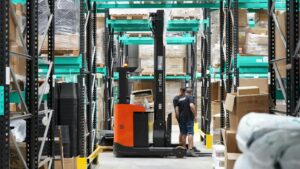
To understand what a reach truck is, you have to look at how it solves the physical challenge of lifting heavy loads in tight spaces. While a standard counterbalance forklift carries its load completely out in front of the chassis, a reach truck is engineered with two forward-extending stabilising outrigger legs to distribute and support the weight. This compact, specialised design lets the machine manoeuvre safely in incredibly narrow warehouse aisles while still reaching tall, vertical racking systems with ease.
The magic happens when the machine is in position. Instead of moving the whole chassis, the operator extends the mast or a scissor-like pantograph mechanism forward to reach the forks out into the racking. Once the pallet is secured, the forks retract the load back within the machine’s wheelbase. This clever physics trick shifts the centre of gravity back over the wheels, allowing the unit to remain extremely stable without needing a massive, heavy metal counterweight at the rear.
Most reach trucks are electric-powered, making them quiet and emission-free for indoor warehouse environments. Operators typically stand up or sit sideways inside a compact cabin, which gives them maximum visibility when driving forward or backward down tight aisles.
In the material handling world, you will often hear people swap names around. While a reach truck is technically a specific machine class, terms like high reach forklift, reach forklift, and narrow aisle reach truck are frequently used to describe the exact same equipment.
Reach Truck vs Counterbalance Forklift
When you are looking to expand your fleet, the first major decision is usually comparing a reach truck vs. a forklift. To help you choose the right machine for your yard or warehouse, let’s compare these two common options side by side on their key operational features.
| Feature | Reach Truck | Counterbalance Forklift |
|---|---|---|
| Primary Environment | Flat, smooth indoor warehouse concrete | Indoor warehouses, outdoor yards, and loading docks |
| Stabilisation System | Outrigger legs and retracted wheelbase | Heavy rear-mounted counterweight |
| Aisle Width Required | Extremely narrow, typically 2.4 to 3.0 metres | Wide, typically 3.5 to 4.5+ metres |
| Maximum Lift Height | Very high, easily reaching 8 to 12+ metres | Moderate, typically up to 4 to 6 metres |
| Power Source | Electric battery | Diesel, LPG, or electric battery |
| Best Used For | High-density vertical racking and narrow aisles | General lifting, container loading, and outdoor travel |
While a counterbalance forklift is a brilliant all-rounder for loading docks and rougher ground, it has a much wider turning circle. If you force a standard forklift into narrow racking lanes, you’ll waste valuable floor space just to give the machine turning room.
Types of Reach Trucks
Not all reach trucks are built the same. Depending on your racking layout and how your business handles inventory, consider a few main configurations.
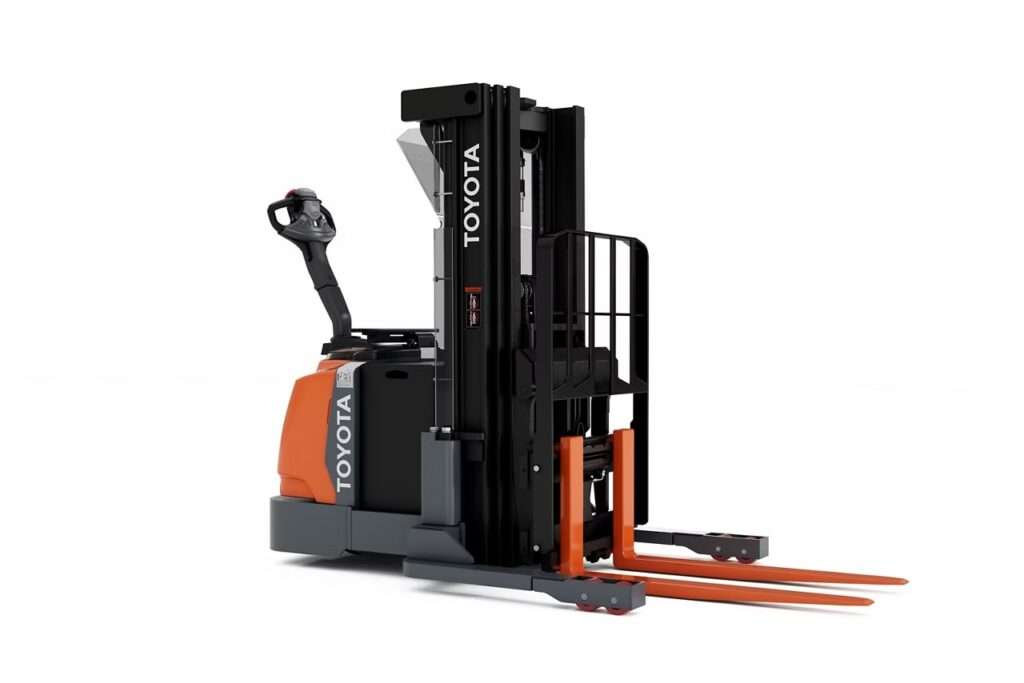
Moving Mast Reach Trucks
These units use a hydraulic rail system that moves the entire mast forward to reach the racking. They are highly efficient, have great ground clearance, and are the standard choice for single-deep warehouse setups.
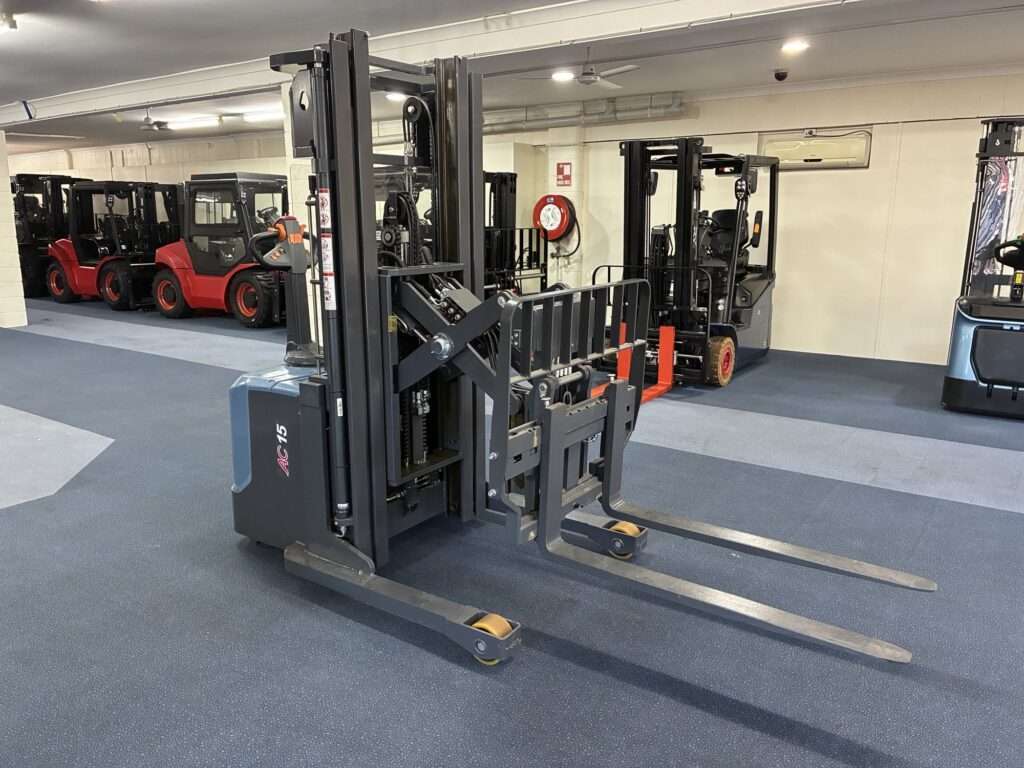
Pantograph Reach Trucks
These machines use a scissor-like mechanical arm to extend the forks forward while the mast remains stationary. They are highly compact and offer excellent stability when fully extended.
Double Deep Reach Trucks
A double deep reach truck uses an extended pantograph mechanism to reach two pallets deep into your racking system. This configuration lets you stack pallets back-to-back, which can increase warehouse storage density by up to 50%. However, keep in mind that the bottom level of racking must be raised off the floor so the outrigger legs can slide underneath.
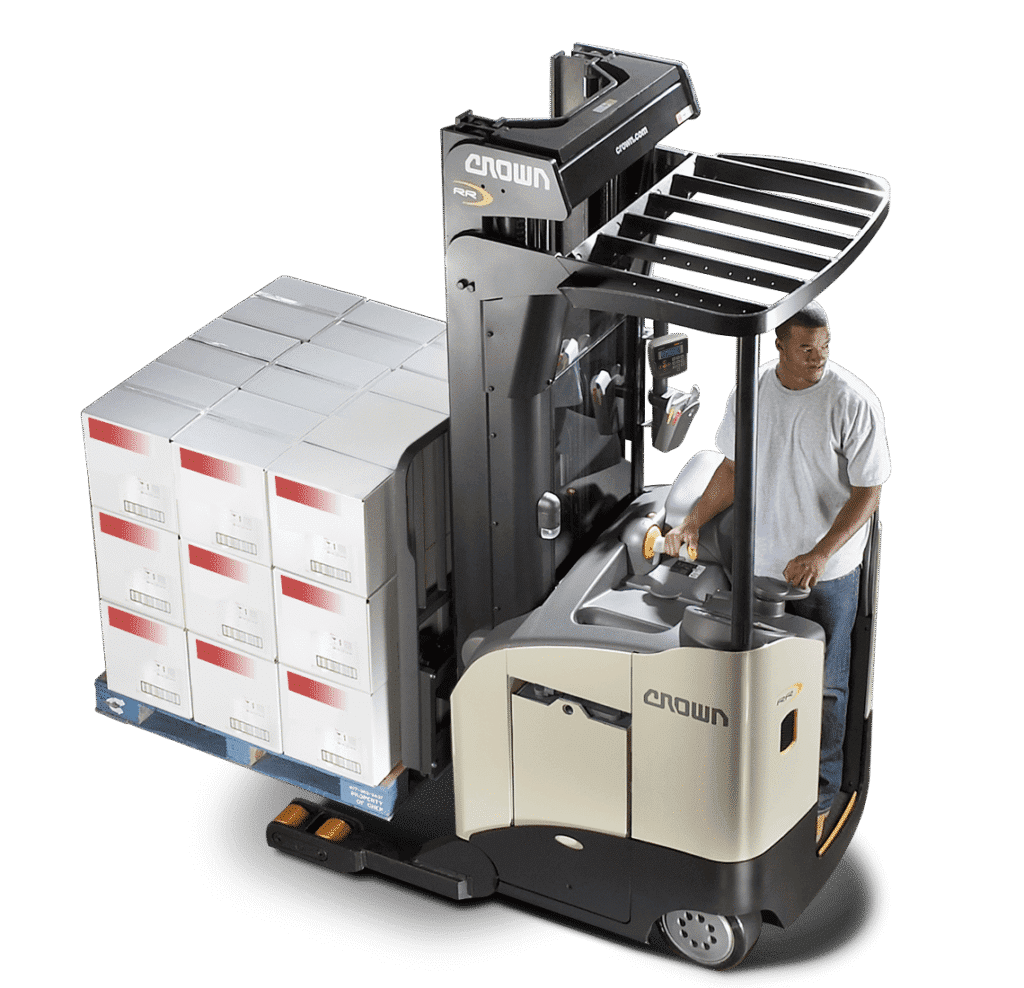
Multidirectional Reach Trucks
Built for long or awkward loads like timber, pipes, or steel, these advanced machines have articulating wheels that can drive sideways, forward, and backward. This allows you to carry long materials down extremely narrow aisles without needing wide turning corridors.
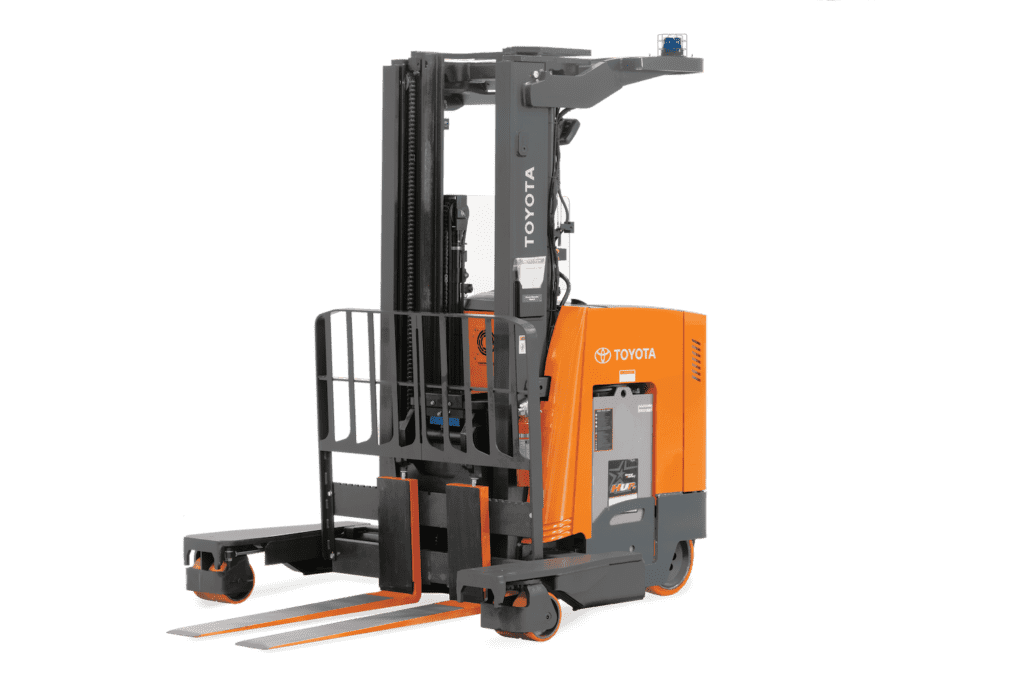
Where Reach Trucks Are Used
Because of their specific design, reach trucks are the gold standard for high-density indoor spaces. You will commonly find these reach trucks working hard in these settings:
- Logistics and 3PL Hubs: High-density third-party logistics warehouses rely on reach trucks to move large volumes of diverse stock quickly across tall racking networks.
- Cold Storage Facilities: Space inside refrigerated and freezer warehouses is incredibly expensive to run. The compact design of electric reach trucks helps maximise every cubic metre of chilled space.
- Manufacturing Warehouses: When raw materials or finished goods are stored in multi-tiered racking systems next to assembly lines, reach trucks handle the heavy lifting without disrupting floor operations.
Is a Reach Truck Right for Your Warehouse?
Before you rush out to buy or hire a machine, you need to verify if your site is ready for one. Run through these practical checks to ensure compatibility:
- The Floor Surface: Reach trucks run on solid polyurethane or cushion tyres and have very low ground clearance. They require flat, smooth, clean indoor concrete. If your yard has ramps, potholes, or gravel, a reach truck will struggle, and you will likely need a counterbalance machine or a telehandler instead.
- Your Racking Layout: If you have high racking above five metres, or if your aisles are squeezed below three metres wide, a narrow aisle reach truck is the ideal choice.
- Power Supply: Since these are electric machines, you will need to ensure your facility has access to proper charging infrastructure, such as three-phase power, to keep your batteries healthy over long shifts.
- Licensing and Training: Under Australian law, driving a reach truck requires a High Risk Work Licence. Specifically, operators need an LF-class licence, which is the same ticket used for standard forklifts. However, because reach trucks drive sideways and steer from the rear, we highly recommend thorough familiarisation training before your team starts working at height.
Talk to the Freedom Forklifts Team
Choosing the right material handling equipment is all about matching the machine to your physical space and operational flow. At Freedom Forklifts, we do not believe in pushy sales pitches. Instead, our focus is on giving you honest, practical advice to protect your budget and keep your operations running safely.
Whether you are looking to hire a reach truck for a busy seasonal peak, invest in a fleet of new forklifts, or browse our reliable range of used forklifts, we are here to help.
Our workshops in Nerang and Yatala service Brisbane, the Gold Coast, Logan, and Northern NSW, and we are always happy to chat. If you want to check compatibility, calculate your residual capacities at height, or discuss whether a specialised high reach forklift is right for your site, get in touch with our team today or call us directly on 07 5596 5777.